
What Are the Advantages of Pad Printing?
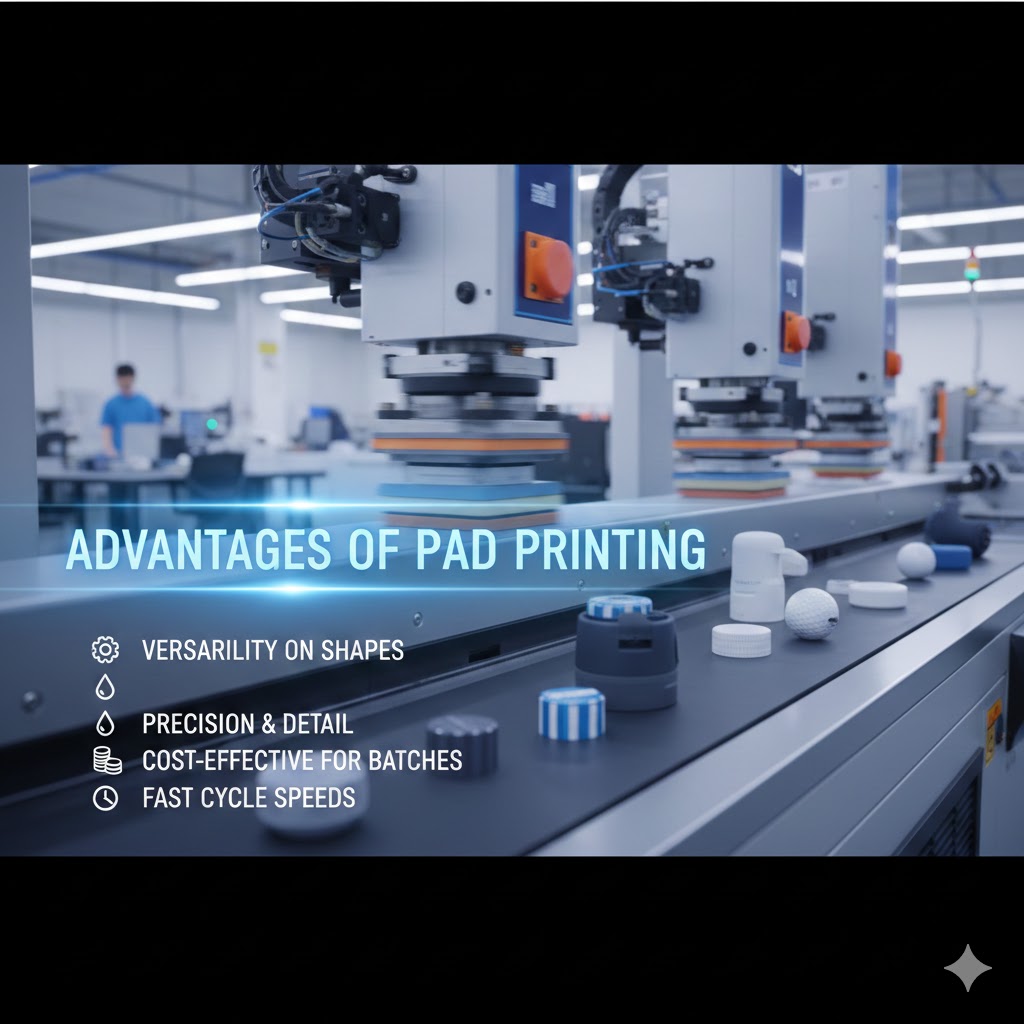
Why Buyers Still Choose Pad Printing After Decades
In international manufacturing, technologies come and go.
But pad printing has remained a core industrial process for more than 50 years.
As someone who has spent over ten years working between pad printing machines, screen printing systems, and overseas buyers, I often hear this question from customers:
“Digital printing is developing fast. Why do so many factories still invest in pad printing machines?”
The answer is simple, but not shallow:
Pad printing survives because it solves real production problems — reliably, repeatedly, and economically.
This article explains the true advantages of pad printing, not from a marketing angle, but from:
Engineering reality
Factory operation experience
Procurement decision logic
If you are a buyer evaluating customized pad printing or screen printing equipment, this is the explanation your engineers wish salespeople would give.
Table of Contents
Advantage #1: Pad Printing Handles Complex Shapes That Other Methods Cannot
Why Geometry Is the First Real Advantage
In real factories, products are rarely flat.
They are:
Curved
Concave
Convex
Irregular
Textured
Pad printing uses a silicone rubber pad that can deform, adapt, and recover.
This single mechanical feature gives pad printing a huge advantage.
From an Engineering Perspective
The silicone pad:
Compresses to match the surface
Transfers ink evenly
Recovers without permanent deformation
No digital printhead, screen frame, or roller system can do this mechanically without complex motion systems.
How to Explain This to Customers (Sales Talk, Engineer Logic)
“If your product surface is not flat, pad printing is not a choice — it is the safest solution.”
This is not an opinion.
It is geometry and physics.
Advantage #2: Superior Ink Adhesion on Industrial Materials
Adhesion Is Not a Small Detail — It Is the Product’s Reputation
In mass production, poor adhesion means:
Scratched logos
Faded markings
Customer complaints
Product returns
Pad printing inks are designed to:
Chemically bond with plastics and metals
Penetrate micro-textures
Resist abrasion and chemicals
Why Pad Printing Inks Work Better in Many Industrial Cases
Because pad printing is a contact process, the ink:
Is physically pressed onto the surface
Has better wetting behavior
Achieves higher transfer efficiency
This is especially important for:
ABS / PC / PVC plastics
Painted or coated parts
Automotive and electronic components
Procurement Insight
Experienced buyers often ask:
“Has this marking passed abrasion and alcohol tests?”
Pad printing answers this question more consistently than many alternative methods.
Advantage #3: High Stability in Long Production Runs
Stability Matters More Than Speed
Many buyers are attracted to new technologies because they look fast.
But real factories care more about:
8-hour consistency
Multi-shift stability
Low scrap rate
Pad printing machines are mechanically simple and extremely stable.
From Real Factory Experience
Once parameters are set correctly:
Cycle after cycle stays consistent
Yield rate remains high
Operator intervention is minimal
This is why pad printing is still dominant in:
Automotive interior parts
Medical device markings
Consumer electronics
How Sales Should Explain This
“Pad printing is not flashy, but it runs quietly and correctly for years.”
That sentence resonates with factory managers.
Advantage #4: Lower Long-Term Operating Cost (Not Just Machine Price)
CAPEX vs OPEX — What Buyers Often Miss
Pad printing machines usually have:
Lower initial cost
Simpler mechanical structure
But the real advantage appears in operating cost.
Typical Operating Cost Advantages
Low energy consumption
Inexpensive consumables
Easy maintenance
Long machine lifespan
Compared to complex digital systems:
Fewer electronic failures
No expensive printhead replacements
Less downtime
Procurement Reality
Serious buyers do not ask:
“Which machine is cheaper?”
They ask:
“Which process costs me less per 1,000 qualified parts over five years?”
Pad printing often wins this calculation.
Advantage #5: Easy Customization for Specific Products
Why Customization Is Critical in Pad Printing
No two products are exactly the same.
Pad printing systems are modular, allowing:
Custom fixtures
Special pad shapes
Multi-color configurations
Automation integration
Engineering Advantage
Because the process is mechanical, customization is:
Predictable
Testable
Scalable
This is why pad printing is ideal for:
OEM / ODM factories
Products with frequent shape variations
Multi-model production lines
Advantage #6: Strong Compatibility with Automation
Pad Printing Integrates Well with Modern Production Lines
Despite being an “old” technology, pad printing works extremely well with:
Robots
Conveyors
Vision inspection systems
This is because:
Motion paths are simple
Cycle timing is predictable
Mechanical tolerances are forgiving
What Buyers Should Listen For from Suppliers
A capable manufacturer should talk about:
Fixture repeatability
Cycle synchronization
Vision alignment strategy
If a supplier only talks about “machine speed,” that is a warning sign.
Advantage #7: Easier Quality Validation and Compliance
Compliance Is About Proof, Not Promises
In regulated industries, buyers must validate:
Adhesion
Durability
Chemical resistance
Pad printing has:
Decades of industrial test data
Established standards
Predictable failure modes
This makes:
Documentation easier
Audits smoother
Customer approval faster
How Buyers Actually Evaluate Pad Printing Suppliers
What Experienced Buyers Care About
From years of supporting sales teams, I see buyers focusing on:
Application testing before purchase
Custom fixture design capability
Ink and pad matching experience
Long-term technical support
They are not impressed by:
Fancy brochures
Over-promised specifications
Common Procurement Mistakes Sales Should Help Customers Avoid
Mistake 1: Choosing Technology Before Understanding the Product
Pad printing is powerful, but only when:
The product is analyzed first
Material and shape are tested
Real samples are printed
Mistake 2: Ignoring Customization in Quotation Stage
Standard machines often require:
Expensive modifications later
Production compromises
Sales should encourage application-based quotations, not catalog pricing.
How Professional Manufacturers Add Real Value
A serious pad printing machine manufacturer should:
Ask detailed product questions
Request real samples
Perform ink and pad testing
Design fixtures before final quotation
This approach builds trust and long-term cooperation.
How Sales Can Position Pad Printing Advantages Correctly
Do Not Say:
“Pad printing is the best.”
Say Instead:
“Pad printing is the most stable solution for your product geometry and production volume.”
This language:
Sounds professional
Matches engineer thinking
Builds credibility
Final Thoughts: Pad Printing Is a Production Strategy, Not a Trend
Pad printing is not chosen because it is new.
It is chosen because it works reliably under real factory conditions.
Its advantages are not theoretical:
They are proven on millions of parts
Across industries
Over decades
For buyers, the real question is not:
“What are the advantages of pad printing?”
But:
“Can this supplier design the pad printing solution around my product, my process, and my long-term cost?”
When that answer is yes, pad printing becomes not just a method — but a competitive advantage.