How a Private Label Pad Printing Machine Supplier Supports Brand Expansion
Take a close look at the crisp logo on your TV remote or the tiny lettering on a curved medical syringe. Have you ever wondered how design details transfer perfectly onto those uneven surfaces? Industry manufacturing data reveals it isn’t a standard sticker, but rather a specialized process known as pad printing.
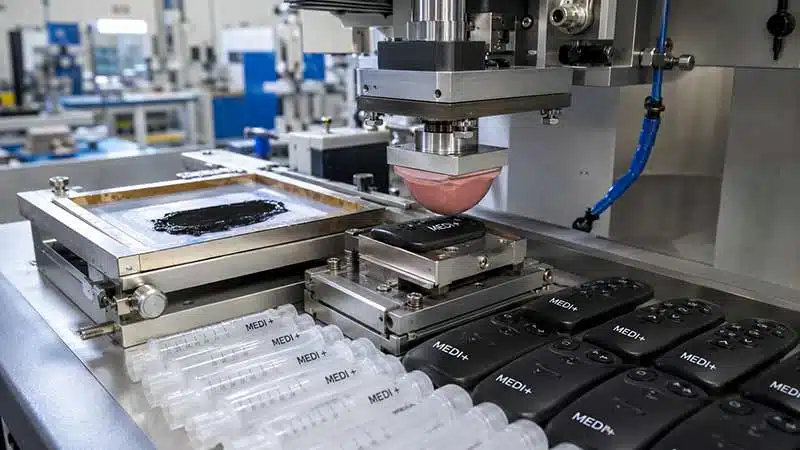
Think of this method as a highly advanced, flexible rubber stamp. In practice, a soft silicone pad acts like a synthetic sponge, dipping into an etched metal plate to pick up ink before pressing and molding itself seamlessly around your oddly shaped product. Mastering this ink transfer is what makes custom branding equipment for industrial printing so vital for companies dealing with unique product dimensions.
Scaling this production in-house doesn’t mean you must become an expert mechanic overnight. Partnering with a dedicated Private Label Pad Printing Machine Supplier provides your growing brand with high-quality, customized machinery backed by ongoing technical support. Rather than buying generic hardware and hoping for the best, you gain a silent engineering partner committed to ensuring your logos always look permanent and professional.
Table of Contents
Flat vs. Curved: Why Pad Printing Beats Screen Printing for Complex Products
Try to stamp a logo onto a golf ball? Traditional methods usually leave a distorted mess. While standard screen printing excels on perfectly flat items like t-shirts, it completely fails on concave or convex surfaces. Rigid screens simply cannot wrap around complex substrates—the industry term for the physical items you are printing on.
To solve this, businesses use the soft, silicone “stamp” of a pad printer. When evaluating pad printing vs screen printing for promotional products, four differences stand out:
Surface Type: Screens need flat items; pads easily adapt to curved, uneven, or textured goods.
Setup Time: Pad printers are significantly faster to set up for small items.
Image Detail: Silicone captures micro-fine text that a screen mesh might blur.
Ink Thickness: Screen printing leaves a thick coat, while pad printing applies a thin, quick-drying layer.
Because of this efficiency, pad printing offers a 30% speed advantage for small items. Advanced machines even use smooth, air-powered pneumatic movement to master multi-color registration, perfectly aligning overlapping colors to create complex logos without smudging.
Investing in multi-color pneumatic pad printing technology ensures you can brand almost anything in-house, regardless of its shape. Once you see how this synthetic sponge conforms to unusual products, the next logical question is where it actually picks up the ink.
The ‘Ink and Plate’ System: Understanding Closed Cups and Clichés
To grab the ink, the silicone sponge needs a precise blueprint of your logo. This comes from an etched metal base—known in the industry as a cliché plate. Through cliché plate making for high-precision printing, your artwork is etched into the surface, creating a shallow valley. When ink fills this microscopic depression, it forms the exact shape of your design, waiting for the pad to pick it up.
But how do you flood that tiny valley with color without smearing the whole metal surface? Modern machines handle this using industrial ink cup systems and doctor blades. Picture an upside-down mug resting flush against the plate. The hard rim acts as a “doctor blade,” scraping tightly against the metal as it slides across. It deposits ink into the etched logo while wiping the surrounding flat areas completely clean.
This contained method solves the biggest headache of older machinery: evaporating ink. Understanding the benefits of closed cup vs open ink well systems reveals a night-and-day difference for production. Older open wells exposed ink to the air, causing rapid drying and messy cleanups. A closed system seals the ink inside, preventing odors, reducing waste, and ensuring color consistency stays perfect across thousands of prints.
Once the cup glides away, leaving the ink sitting perfectly in the etched valley, the machine is ready for the transfer. The magic now relies entirely on the stamp pressing down to retrieve that wet logo with the precise amount of force and flexibility.

The Squish Factor: Choosing the Right Silicone Pad Shore Hardness
Think of the silicone pad as a highly engineered sponge. When it presses down to pick up and transfer your logo, the amount of “squish” it has is critical. This firmness is measured by a scale called “Shore hardness.” Choosing the correct density ensures the pad matches your item’s physical resistance. For instance, a pad that is too hard might crack a delicate, hollow plastic shell, while one that is too soft won’t push the ink firmly enough into a slightly textured surface.
Managing this silicone compression is the secret to preventing your design from stretching or warping. If a pad flattens improperly over a curved object, you will get noticeable image distortion. Following a simple silicone pad shore hardness selection guide helps you match the pad’s firmness to your product’s exact contour, which simultaneously extends the pad’s overall lifespan through proper pressure management:
Soft Pads: Ideal for fragile items or sharp curves, like glass lightbulbs.
Medium Pads: The everyday standard for smooth, oddly shaped consumer goods.
Hard Pads: Best for flat, highly textured surfaces requiring very firm printing pressure.
Perfecting these precise mechanical details transforms generic machinery into highly tailored custom branding equipment for industrial printing. Fortunately, an experienced partner can configure these exact specifications, allowing you to focus on growth.
Your Brand, Their Engineering: The Business Case for Private Label Suppliers
Building industrial equipment from scratch requires massive financial investment and engineering expertise. Instead of reinventing the wheel, savvy entrepreneurs leverage established designs through strategic partnerships. Learning how to choose a white label machinery manufacturer allows you to put your logo on proven equipment without absorbing years of expensive research and development costs.
This “your brand, their engineering” approach transforms a standard vendor into a valuable silent partner. Sourcing from a private label manufacturer provides five specific advantages:
Support: Direct access to reliable mechanical troubleshooting expertise.
Custom Software: Intuitive digital touchscreens designed specifically for your team.
Branding: Professional equipment proudly displaying your unique corporate identity.
Quality Control: Rigorous physical testing before leaving the factory floor.
Logistics: Seamless coordination from initial assembly to final delivery.
What happens when your daily operators aren’t seasoned printing technicians? By requesting customized control software for industrial printers, your supplier can easily simplify complex machine interfaces. They can program simple, one-touch presets for different ink colors or product shapes, ensuring your staff can run the system safely with minimal training.
Ultimately, relying on top-rated contract manufacturing for printing equipment guarantees that seasoned experts oversee every physical component. This professional oversight secures consistent production quality while you focus purely on scaling your business and coordinating global logistics.
Navigating Sourcing and Logistics: From Quality Tests to Global Shipping
Taking the leap into sourcing white label industrial printers from overseas involves more than just picking a design. You need a partner who actively manages the shipping and logistics for heavy industrial machinery, ensuring your equipment arrives safely without customs headaches. A reliable supplier coordinates secure crating and freight forwarding, so you aren’t left figuring out how to safely move a 500-pound machine off a delivery truck.
Before that crate leaves the factory, verifying print durability is essential. One simple but highly effective method is performing ink adhesion testing for plastic substrates, commonly known in the industry as the tape test. By firmly pressing adhesive tape over a freshly printed logo and sharply pulling it off, you can instantly see if the ink peels away or stays permanently bonded to the product surface.
Understanding your long-term investment requires looking past the initial sticker price. Smart entrepreneurs consult an automated pad printing machine price guide to estimate their total cost of ownership, factoring in consumable replacement pads, metal plates, and ongoing maintenance. Once you calculate these true operational costs and secure your shipping logistics, you are ready to launch your in-house printing line.

Your Blueprint for Scaling: 3 Steps to Launching Your In-House Printing Line
You no longer need to view oddly shaped products as branding roadblocks. You now have the knowledge to bring your printing in-house, reducing outsourcing costs to generate a measurable return on investment. By partnering with a reliable Private Label Pad Printing Machine Supplier, you secure a dedicated system for maintaining production quality in private labeling. You can finally take complete control of your manufacturing supply chain.
Turn this newfound independence into action with a straightforward approach. First, evaluate your product shape to determine the necessary pad flexibility. Next, pick a supportive partner who understands your specific production volume and technical needs. Finally, always test ink adhesion on your actual materials before full-scale manufacturing. Taking these steps removes the mystery from custom printing, making your operations more self-reliant. Your brand identity is entirely yours to control—now you have the exact tools to leave a lasting mark.