How a Private Label Pad Printing Machine Supplier Supports Brand Expansion
Scaling a business in today’s hyper-competitive market requires more than just a great product; it requires a memorable, consistent brand identity. Whether you are manufacturing promotional items, medical devices, automotive parts, or consumer electronics, your logo and product information must be flawlessly printed on every item. But how do you maintain this consistency as your product lines multiply and your production volume skyrockets?
This is exactly how a private label pad printing machine supplier supports brand expansion. By partnering with a specialized manufacturer, growing companies can access top-tier technology, reduce operational headaches, and scale their branding efforts without losing quality.
In this article, we will explore the strategic value of these partnerships, dive into the technology that makes it possible, and explain how leveraging a dedicated supplier can transform your production line.
The Strategic Role of a Specialized Printing Partner
When expanding a brand, companies are often faced with a critical decision: should they build a massive printing infrastructure from scratch, or should they partner with experts?
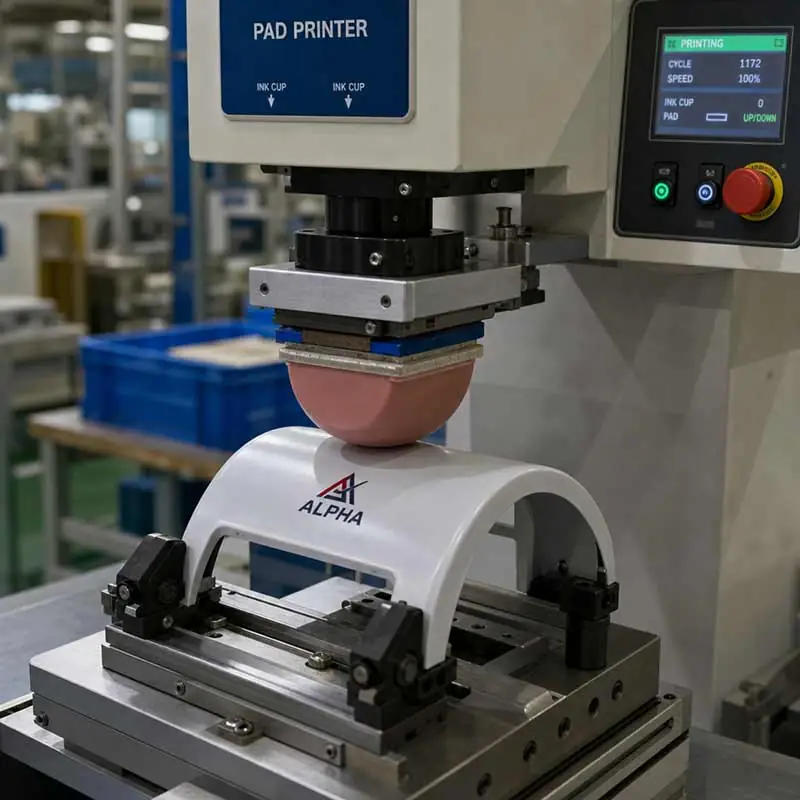
For most growing companies, the answer lies in collaboration. A private label pad printing machine supplier acts as an invisible extension of your business. Rather than just selling you a machine, they provide tailored hardware and expertise under your own brand’s umbrella.
If you find yourself asking why choose private label pad printing for product lines, the answer comes down to three factors: agility, cost, and brand ownership. By sourcing your machines from a private label supplier, you can offer specialized branding services to your own clients or standardize your internal manufacturing processes without bearing the burden of original research and development.
Furthermore, optimizing supply chains with dedicated printing partners means fewer bottlenecks. When your supplier understands your specific needs, they can forecast equipment needs, supply replacement parts proactively, and ensure your production line never stops due to a printing error.
Scaling Up: In-House vs Private Label Pad Printing Machines
As product demand increases, companies must evaluate their operational efficiency. The debate of in-house vs private label pad printing machines is common among operations managers.
Building a fully independent, custom-engineered printing department requires immense capital, specialized engineers, and years of trial and error. Conversely, relying entirely on third-party outsourcing can result in lost quality control and high per-unit costs.
Partnering with a private label supplier offers the perfect middle ground. You get the equipment in your facility—maintaining total control over production times and quality—but the machines themselves are expertly engineered by a specialized manufacturer.
This approach is instrumental in reducing overhead with white label printing suppliers. You save on R&D, engineering salaries, and costly prototyping. Instead, you receive proven, reliable pad printing equipment that is ready to work on day one.
For smaller, ambitious companies, this relationship offers highly scalable product marking solutions for small businesses. You can start with a single, semi-automatic machine and seamlessly upgrade to fully automated systems as your output demands grow.

Key Technological Advantages for Evolving Brands
A successful brand expansion requires technology that can adapt to new materials, new shapes, and higher volumes. Private label suppliers excel at providing custom printing solutions tailored to specific industry requirements. Let’s look at the specific technologies that make this possible.
1. Precision and Long-Term Durability
When printing thousands of items daily, the components of your machine must be robust. High-quality silicone pad durability for long-run branding is a game-changer. The silicone pad is the core of the machine, responsible for picking up ink and transferring it to the product. A supplier that formulates highly durable silicone ensures that your pads won’t degrade, tear, or lose their shape midway through a massive production run.
Equally important is cliché plate customization for brand logos. The cliché is the etched plate that holds the ink pattern. A great supplier will offer custom-etched cliché plates tailored exactly to your brand’s typography and logo, ensuring that even the finest lines and smallest legal texts are perfectly legible on your products.
2. Speed and Intelligent Automation
When expanding into new product categories, speed is revenue. Top-tier private label machines feature high-speed ink transfer for multi-product expansion, allowing a single machine to quickly brand hundreds of items per minute.
However, speed means nothing without consistency. In fast-paced environments, ink can thicken due to solvent evaporation, leading to messy prints. To combat this, modern machines feature automatic ink viscosity control systems. These systems continuously monitor the ink’s thickness and automatically inject exact amounts of solvent when necessary. This guarantees a flawless print from the first item to the millionth, drastically reducing scrap rates and operator intervention.
3. Adaptability and Future-Proofing
A brand’s product lineup today might look entirely different in five years. This is why forward-thinking suppliers offer modular pad printing systems for evolving brands. Modular systems allow you to add new capabilities—such as multi-color printing, automated part feeding, or UV curing stations—without having to purchase an entirely new machine.

What Are the Benefits of OEM Pad Printing Partnerships?
Original Equipment Manufacturer (OEM) and private label partnerships go beyond just buying a machine. But exactly what are the benefits of OEM pad printing partnerships for businesses looking to dominate their niche?
First, they provide cost-effective equipment for brand identity consistency. Because OEM partners produce machines at scale, they pass the manufacturing savings onto you. You get enterprise-grade technology at a fraction of the cost of building it yourself, allowing you to maintain strict brand consistency across all global manufacturing facilities.
Second, for businesses operating as distributors or B2B suppliers, these partnerships offer incredible potential for revenue generation. By sourcing custom industrial printing equipment for resellers, you can sell these advanced machines to your own network under your own brand name. Your supplier handles the complex manufacturing, while you handle the sales and client relationships, expanding your brand’s footprint in the industrial sector.
Finally, a major hurdle in global expansion is maintenance. A premium supplier will provide robust technical support for large-scale printing operations. Whether it is virtual troubleshooting, on-site repairs, or rapid dispatch of spare parts, having an expert team backing your production line ensures that your expansion efforts are never derailed by technical downtime.
A Quick Guide to Integrating Custom Printing into Existing Workflows
Upgrading your production line can seem daunting. If you are looking for a practical guide to integrating custom printing into existing workflows, follow these essential steps to ensure a smooth transition:
Conduct a Product Audit: Before ordering equipment, assess your full product line. Note the materials (plastics, metals, glass), shapes (flat, cylindrical, contoured), and production volumes. This helps your supplier recommend the exact pad printing equipment you need.
Opt for Customization: Don’t settle for off-the-shelf if it doesn’t fit. Request custom printing solutions, such as bespoke part-holding fixtures, to ensure your uniquely shaped products are held perfectly still during the printing process.
Prioritize Operator Training: Even the most advanced automatic machine requires human oversight. Ensure your private label supplier provides comprehensive training on machine operation, cliché plate changing, and general maintenance.
Implement Quality Control Checks: Take advantage of automated features like the aforementioned ink viscosity controllers, but pair them with routine visual inspections to catch any deviations in brand colors early.
Plan for Scalability: Design your floor space to accommodate modular upgrades. Leave room for conveyor belts and automated feeders so your workflow can grow seamlessly alongside your brand.

Conclusion
Navigating brand expansion is a complex journey, but ensuring your product’s visual identity remains flawless shouldn’t be the hardest part. Understanding how a private label pad printing machine supplier supports brand expansion is the key to unlocking scalable, high-quality, and cost-efficient production.
By leveraging the technological advancements of dedicated OEM partners—from highly durable silicone pads to automatic viscosity controls—growing brands can drastically reduce overhead while increasing their output. Whether you are upgrading from manual methods, bringing outsourced production back in-house, or reselling equipment under your own name, a reliable private label supplier is an indispensable asset.
Investing in the right partnership today will guarantee that your brand leaves a lasting, perfect impression on every single product you ship tomorrow.