How OEM Pad Printing Machine Services Help Global Brands
In today’s competitive global market, a brand’s visual identity is its most valuable asset, communicating trust and quality instantly. Whether it is a microscopic logo on a medical device, instructional lettering on electronics, or branding on an automotive dashboard, print quality matters. This is where understanding How OEM Pad Printing Machine Services Help Global Brands becomes a crucial strategic advantage. As multinational companies scale, they face unique production bottlenecks related to product marking. Off-the-shelf printing solutions frequently fail to meet specialized demands, leading to faded logos and costly downtime. Fortunately, partnering with the right Original Equipment Manufacturer (OEM) transforms these challenges into operational victories. By leveraging customized equipment tailored to your product line, global enterprises achieve unparalleled efficiency, cost savings, and quality assurance.
Table of Contents
Demystifying the Power of Pad Printing Technology
To appreciate the value of specialized OEM services, it helps to understand the mechanics of modern pad printing technology. At its foundation, this versatile method utilizes advanced silicone pad transfer technology to pick up wet ink from an etched flat plate (a cliché) and press it smoothly onto a three-dimensional object. Because the silicone material is inherently flexible, it effortlessly conforms to irregular shapes. This unique characteristic makes it the premier choice for printing on curved, textured, convex, or recessed surfaces where traditional methods fail.
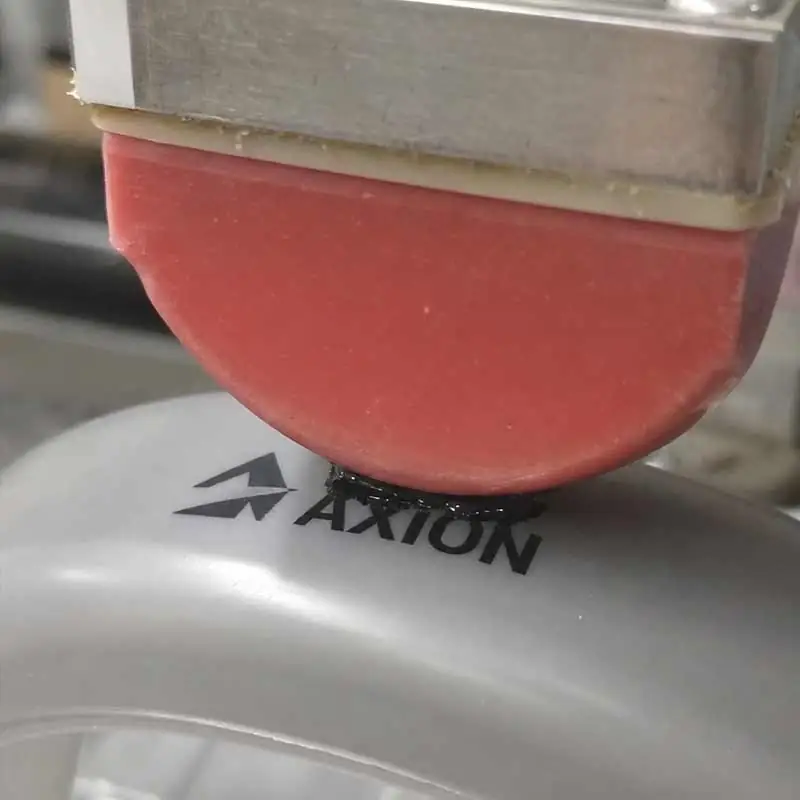
Many product engineers often weigh the pros and cons of pad printing vs screen printing for electronics. While screen printing remains an excellent choice for perfectly flat substrates like glass panels, it falls short when dealing with the intricate curves and miniature components typical in modern consumer electronics. Pad printing offers vastly superior adaptability, allowing for micro-precision printing on computer keyboards, dense circuit boards, and wearable technology casings without smudging.
Why Global Brands Turn to OEM Pad Printing Machine Services
When companies expand manufacturing across borders, they encounter significant logistical and quality-control hurdles. This is exactly where comprehensive oem pad printing machine services shine. By collaborating directly with specialized machine manufacturers, global brands unlock tailored solutions that standard equipment simply cannot provide.
Ensuring Global Supply Chain Branding Consistency
One persistent headache for multinational corporations is maintaining logo integrity across international manufacturing sites. A corporate logo printed in a high-humidity facility in Southeast Asia must look identical to one printed in a dry, climate-controlled plant in Germany. By utilizing custom industrial pad printing equipment solutions, global brands standardize their entire fleet of machinery. This includes unifying ink viscosity controls, automated pad pressure settings, and environmental control enclosures across all locations. This standardization guarantees true global supply chain branding consistency, ensuring the end consumer receives a unified brand experience regardless of assembly locati0n.
Deploying High Volume Product Marking Systems
Scaling up global production requires fail-safe infrastructure. Top-tier OEMs specifically design heavy-duty high volume product marking systems capable of running continuously without a drop in print quality. These advanced machines are engineered for extreme endurance, significantly reducing costly machine downtime. Furthermore, the benefits of contract pad printing machine manufacturing include exclusive access to proprietary software upgrades, localized technical support, and scalable architectures that grow alongside evolving production demands.

Tackling Unconventional Substrates and Complex Designs
Global brands frequently push the envelope by innovating with materials such as sustainable bioplastics, aerospace metals, or chemically treated glass. These innovations often bring major decorating hurdles.
Solving Complex Surface Printing Challenges
Standard printing methods often fail on non-porous or highly textured materials. Expert OEM partners, however, excel at solving complex surface printing challenges by customizing the silicone pad durometer, cliché depth, and chemical ink formulation. Additionally, OEMs integrate surface pre-treatment modules directly into the printer. This tailored approach is instrumental in eliminating product labeling durability issues, ensuring that critical information like serial numbers or safety warnings remains legible even after prolonged exposure to harsh environmental elements, cleaning chemicals, or physical friction.
Meeting Strict Medical and Industrial Standards
In highly regulated sectors, product printing is a critical matter of legal compliance and patient safety. Medical device manufacturers must rigorously adhere to strict medical grade ink adhesion standards, such as ISO 10993. A knowledgeable OEM partner can skillfully engineer a custom pad printing machine fully integrated with specialized curing systems, such as LED UV or thermal drying ovens. This guarantees that non-toxic medical inks bond permanently to items like catheters, syringes, or surgical tools without degrading.

Advanced Automation and Seamless Line Integration
As modern factories transition towards Industry 4.0 standards, standalone machinery is quickly becoming obsolete. Today’s global brands require sophisticated equipment that communicates flawlessly with their broader manufacturing ecosystems.
Unlocking Automated Multi-Color Precision
Historically, printing multiple colors on a single product meant moving a part sequentially through several machines, massively increasing the risk of misalignment and production bottlenecks. Modern OEM services now offer cutting-edge machines that boast incredible automated multi-color pad printing precision. Using advanced servo-driven indexers, vision alignment cameras, and robotic part-handling, these systems apply up to six distinct colors in a single rapid cycle with microscopic accuracy. This powerful capability is vital for rendering complex brand logos or accurately color-coding intricate technical parts.
Seamlessly Integrating Equipment
A major advantage of working closely with an established OEM is their ability to customize the machine’s physical footprint and digital software. Integrating pad printing into production lines becomes a seamless process when the OEM designs the equipment to interface directly with your factory’s existing PLCs, robotic handling arms, and conveyor belt systems. This high level of smart automation drastically reduces manual labor, heavily minimizes the risk of human error, and powerfully optimizes overall daily throughput.

Strategic Investment: Evaluating Your Procurement Options
When upgrading production capabilities, supply chain executives must carefully evaluate the long-term ROI of in-house vs OEM machine procurement. Attempting to build a custom printing system internally, or heavily modifying generic printing equipment in-house, severely drains valuable internal engineering resources. It also delays time-to-market and almost always results in subpar print quality and reliability.
Conversely, partnering directly with an OEM offers a comprehensive turnkey solution. The OEM entirely takes on the R&D burden, meticulously customizing the machinery to your exact dimensional and operational specifications. This collaborative approach is essential for developing scalable branding hardware strategies. Instead of merely buying a rigid, single-use machine for one specific product run, you invest intelligently in a modular, flexible hardware platform that can be easily retooled with new pads, inks, and holding fixtures as your global product line evolves.
Best Practices for Selecting the Right Partner
The success of your global product marking strategy heavily depends on the manufacturer you select. Understanding how to choose an OEM pad printing partner can save your multinational brand millions of dollars in wasted materials, rejected parts, and lost time. Here are the critical criteria to consider during your vendor selection process:
Customization Capabilities: Do they genuinely offer bespoke engineering solutions, or simply tweak standard models? Look for a partner with a proven track record in delivering complex, custom industrial pad printing equipment solutions from scratch.
Comprehensive Global Support Network: Can they reliably provide ongoing maintenance, spare parts, and comprehensive operator training to all your international facilities? This is crucial for maintaining logo integrity across international manufacturing sites.
Deep Industry Expertise: Ensure they have extensive experience navigating the regulations of your sector, whether that involves strictly meeting medical grade ink adhesion standards or complying with heavy-duty automotive weather durability requirements.
Advanced Automation Proficiency: The best OEMs have dedicated in-house robotics experts focused on smoothly integrating pad printing into production lines with minimal disruption.
Rigorous Testing and Validation: A reliable OEM runs documented sample testing on actual products. This proves their capability in solving complex surface printing challenges well before a purchase contract is signed.

Securing the Future of Global Brand Marking
In an era where modern consumers and strict industry regulators demand perfection, your product’s physical branding must be flawless. Embracing specialized OEM services provides a distinct competitive advantage. By skillfully leveraging advanced silicone transfer technologies, cutting-edge custom automation, and globally supported machinery, global brands can completely eliminate frustrating durability issues, scale their worldwide operations efficiently, and ensure pristine logo representation across all borders.
Ultimately, mastering How OEM Pad Printing Machine Services Help Global Brands is about recognizing that industrial printing is a critical, highly engineered stage of the manufacturing process. By strategically choosing the right OEM partner, you secure the advanced technology and deep engineering expertise necessary to keep your brand looking sharp, consistent, and exceptionally professional on every single product, in every market around the globe.