
Automatic Pad Printing Machine Manufacturer: Improving Efficiency in Mass Production
Pick up the TV remote sitting next to you and look closely at the white numbers on the rubber buttons. They are not stickers, nor were they painted on by hand. Getting a crisp design onto a curved, three-dimensional object is a massive challenge. The unsung hero behind those tiny numbers is a clever technology called pad printing.
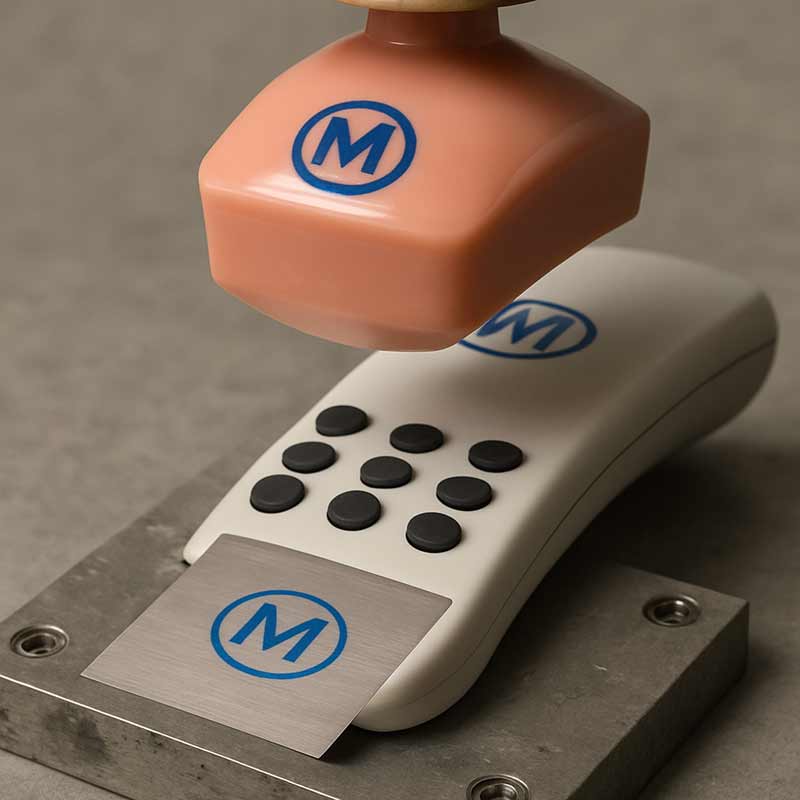
Think of this technique like applying a temporary tattoo. The secret lies in a squishy, specialized tool known as a silicone pad, which acts like a flexible stamp. During the pad printing process, this soft pad picks up wet ink from an etched flat plate and gently presses it onto the product’s surface, technically referred to as the substrate. Because the pad is so flexible, it seamlessly wraps around the curves of toys, medical syringes, and bottle caps without smudging the design.
Imagine trying to perfectly hand-stamp a logo onto 10,000 golf balls by Friday afternoon. Automated pad printing machines conquer this seemingly impossible timeline by improving efficiency in mass production. These automated systems accurately print thousands of parts per hour with zero fatigue, transforming a tedious manual chore into a high-speed science.
The basic “pick-up and press” mechanic inside these bustling factories creates better, more affordable products by applying the perfect finishing touches to the everyday items around us.
The 4-Step Magic Trick: How a Silicone Pad Stamps Anything from Golf Balls to Medical Syringes
At the heart of an automatic pad printing machine is a shape-shifting silicone pad that perfectly wraps flat logos around curved bottle caps. Thanks to silicone pad durability and ink transfer physics, it works like a sponge that grabs wet ink without actually absorbing it, molding around 3D objects to drop off designs like a temporary tattoo.
Before the pad strikes, the image is prepared on a flat plate, known as a cliché. The artwork is etched slightly into this surface so the pad printing process can unfold in four rapid stages:
Inking: The machine floods the cliché with wet ink.
Doctoring: A metal blade scrapes away the excess, leaving ink only inside the etched logo.
Picking: The silicone pad presses down, lifting the ink out of the etching.
Printing: The pad squishes onto the product, seamlessly transferring the image.
During the brief travel time between picking up the ink and pressing it onto a medical syringe, the ink becomes incredibly sticky. This guarantees the logo clings to the product instead of staying on the silicone. While someone could carefully orchestrate this delicate transfer by hand once, achieving perfect placement continuously illustrates why automation beats manual labor: scaling from 10 to 1,000 parts per hour.
Why Automation Beats Manual Labor: Scaling from 10 to 1,000 Parts Per Hour
Imagine watching a worker stamp logos onto bottle caps by hand. Even moving quickly, human hands inevitably tire and slow down. This brings us to the concept of cycle time—the exact number of seconds needed to complete one single print. The secret to reducing cycle times with automatic pad printers is relentless mechanical momentum. Rather than counting daily output in dozens, modern factories measure throughput, proudly tracking the thousands of flawless items their machines can produce every hour.
However, a lightning-fast printing pad is completely useless if someone must manually place every blank product beneath it. To truly maximize speed, factories rely on integrated conveyor systems for high-volume throughput. These automated tracks act like an endless river, steadily feeding bare items directly into the printer’s path and whisking finished goods away without a single pause.
Pushing products down an assembly line this rapidly also solves a hidden manufacturing problem: costly mistakes. If a person physically handles thousands of items, slight shifts inevitably cause crooked logos and wasted plastic. By eliminating manual labor bottlenecks in industrial marking, automation ensures every object is clamped in the exact same position for every strike, resulting in perfect consistency and zero scrap.
Reaching that level of high-speed perfection requires more than just unboxing a fast machine. The ink, silicone pads, and conveyors must all work together in flawless harmony to keep the factory floor continuously moving. Finding the right equipment to build this seamless setup leads directly to choosing your printing partner: a 5-point checklist for industrial reliability.

Choosing Your Printing Partner: A 5-Point Checklist for Industrial Reliability
Making the leap to high-speed printing means you are no longer just buying equipment; you are investing in a manufacturing lifeline. There is a massive difference between a lightweight “hobbyist” device built for weekend crafts and true “industrial grade” equipment designed to run continuously without shaking apart. Investing in industrial-grade equipment reveals that long-term reliability is just as critical as printing speed.
Every machine requires regular maintenance, especially ones handling thousands of items daily. When a gear or sensor inevitably wears out, waiting weeks for a replacement—known in the manufacturing world as a long “lead time”—can halt your entire business. Following a step-by-step guide to choosing an industrial printer supplier ensures you will not be left stranded waiting for a simple fix.
Protect your investment by asking potential partners these five critical questions:
Are replacement parts stocked locally? Shorter lead times prevent expensive factory downtime.
Do you engineer custom tooling? You will need specialized physical fixtures to hold your uniquely shaped products perfectly still while they are stamped.
What does technical support cover? Clarify exactly how they handle urgent troubleshooting or on-site repairs.
Is operator training included? Your team needs to learn the daily maintenance routines.
What is the warranty on high-wear components?
Securing a dependable partner guarantees your robotic assembly line remains a profitable asset. Once the heavy-duty hardware is locked in, the next challenge is taming the sticky chemistry used during the process. After all, moving fast is only helpful if the workspace stays remarkably clean, which leads directly to exploring why modern ink cup systems prevent mess and waste.
Sealed for Success: Why Modern Ink Cup Systems Prevent Mess and Waste
Leaving the lid off a can of paint overnight predictably results in a thick, unusable sludge. In factory printing, ink thickness—known as viscosity—is a constant battle because ink exposed to open air dries out and creates massive chemical waste. Older machines relied on open troughs that required constant scraping, thinning, and cleaning, turning the workspace into a messy nightmare.
To solve this, modern assembly lines use industrial grade hermetic ink cup technology, which operates like an airtight, upside-down coffee mug sliding across the printing plate.
The rim of this cup is fitted with a razor-sharp ceramic ring that holds the ink inside while simultaneously wiping the plate perfectly clean after every single pass. Because the ink is completely sealed off from the outside air, it stays perfectly liquid for days, drastically reducing tedious cleanup time and saving factories from throwing away expensive chemicals.
Managing this precise, rapid movement requires a mechanical brain, which is where PLC controlled ink cup systems come into play. A PLC, or Programmable Logic Controller, is essentially a rugged mini-computer that dictates exactly when to slide the cup, how hard to press the silicone pad, and how fast the conveyor should move.
This automated coordination is exactly what separates simple single-color stamping from advanced high-speed multi-color pad printing equipment. When a factory needs to print a complex, four-color logo on a plastic toy, the computer ensures each color is stamped in a fraction of a second without smudging. Now that the sticky chemistry is perfectly managed and the timing is flawless, the only remaining challenge is figuring out how to precisely stamp those colorful designs onto uniquely shaped, three-dimensional objects.

Conquering Curved Surfaces: Using Custom Tooling and Silicone Physics to Print the Impossible
Look at the buttons on a curved video game controller or the dosage lines on a medical syringe. Getting a flat design onto those strange, uneven shapes requires more than just a squishy silicone pad; it demands keeping the object completely frozen in place. To achieve this, factories design specialized “nests” called jigs or fixtures. This custom tooling for irregular surface printing acts like a tailored cradle, securely gripping the product so it cannot shift even a fraction of a millimeter when the machine presses down.
Without that rock-solid foundation, high-speed stamping quickly falls apart. By holding the part perfectly still, these nests are the secret to improving print registration accuracy in mass production. Registration accuracy simply means hitting the exact same microscopic target on the product every single time. For everyday toys, a missed target might just mean a crooked smile on an action figure, but for intricate medical devices or tech parts, perfectly aligned text is absolutely critical for consumer safety and usability.
Perfect timing and tight grips only work when the ink itself cooperates. The silicone pad relies on specific chemical physics to pick up and release the image, which requires optimizing ink viscosity for consistent high-speed output. If the liquid becomes too thick, it won’t transfer smoothly. While pad printing masters these complex 3D curves, you might wonder if traditional flat methods still have a place. When evaluating automated vs. screen printing: which one wins for your high-volume project?
Automated vs. Screen Printing: Which One Wins for Your High-Volume Project?
Think about your favorite graphic t-shirt. The bold design was likely made using screen printing, a traditional method that pushes ink through a woven stencil. It is fantastic for large, flat items, but it heavily struggles with complex surface geometry. If you try to screen print a logo onto a curved coffee mug handle, the rigid screen simply cannot wrap around the shape.
Choosing the right manufacturing tool comes down to a side-by-side comparison of your product’s specific needs:
Shape: Screen printing wins for broad, flat surfaces. Pad printing dominates 3D, curved, or recessed objects.
Detail: Pad printing excels at microscopic text, making it ideal for precision industrial marking on tiny electronic components.
Speed: When measuring automatic pad printing vs screen printing efficiency, pad presses often require significantly less setup time between multi-color jobs.
By selecting pad printing for small, intricate designs, businesses secure major cost-saving benefits through reduced material waste and faster changeovers. Yet, even the most efficient technology will eventually stall without proper care. To protect your equipment and keep the assembly line humming, it is time to explore the maintenance blueprint: 3 habits to prevent production bottlenecks.
The Maintenance Blueprint: 3 Habits to Prevent Production Bottlenecks
Protecting your machine investment starts with understanding its “engine.” When comparing servo-driven vs pneumatic pad printing machines, the difference is like choosing between a smart electric car and a traditional gas engine. Pneumatic systems use compressed air to punch the pad down, requiring constant pressure tuning. Servo-driven options use precise electric motors, offering smoother movements that significantly reduce mechanical wear. Yet, regardless of what drives your setup, neglecting basic care turns high-speed profits into expensive halts.
Keeping the factory floor humming comes down to three simple daily and weekly maintenance habits:
Daily: Clean the ink cups thoroughly to prevent dried, gummy clumps from ruining tomorrow’s production run.
Weekly: Inspect your silicone pad durability. If this squishy, stamp-like carrier starts looking dull or cracked, it will transfer fuzzy logos and needs immediate replacement.
Monthly: Lubricate moving joints and check air filters to stop friction before it starts.
Catching a worn-out pad early costs just a few dollars, but unexpected breakdowns can stop production entirely, resulting in massive downtime costs. By prioritizing simple upkeep, you guarantee a smooth journey down Your Road to Manufacturing Efficiency: Transforming Ideas into Thousands of Products.
Your Road to Manufacturing Efficiency: Transforming Ideas into Thousands of Products
Modern manufacturing relies on more than just moving fast; true efficiency demands flawless consistency and minimal waste across thousands of oddly shaped items.
Bringing this precision to your own operations starts with auditing your current marking process to spot bottlenecks and errors. Conducting a thorough cost-benefit analysis of upgrading to automated printing workflows reveals how swapping manual labor for robotic reliability ultimately pays for itself.
Picking up a printed pen or bottle cap reveals the precision of perfect ink transfer. Recognizing these intricate manufacturing details highlights the value of choosing the right automated technology for high-volume production projects.